
TELIN Department of Telecommunications and Information Processing
Welcome! Currently, our department consists of the following research groups (each with their own website) and is part of the Ghent University.
DDCM Database Document and Content Management
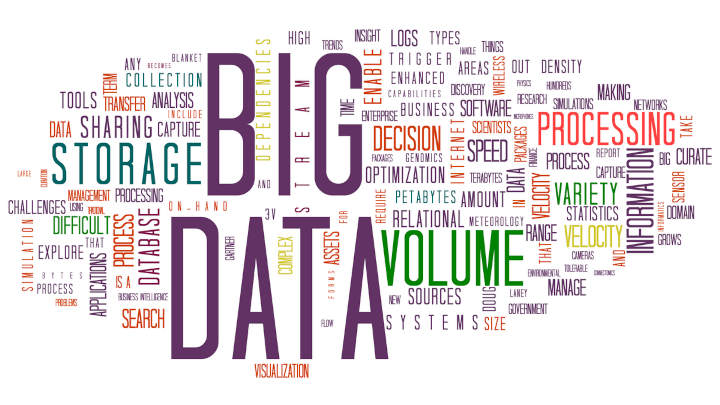
Digital information sources are growing tremendously. 'Big Data' sets which are too large or too complex cannot be efficiently handled by traditional information management systems. More and more organizations nowadays put large efforts in efficiently collecting, organizing and managing their data. DDCM research aims to support these efforts by investigating and developing new technologies for coping with the many challenges that stem from 'Big Data' and from the natural heterogeneous and imperfect/uncertain character of information.
DIGCOM Digital Communications
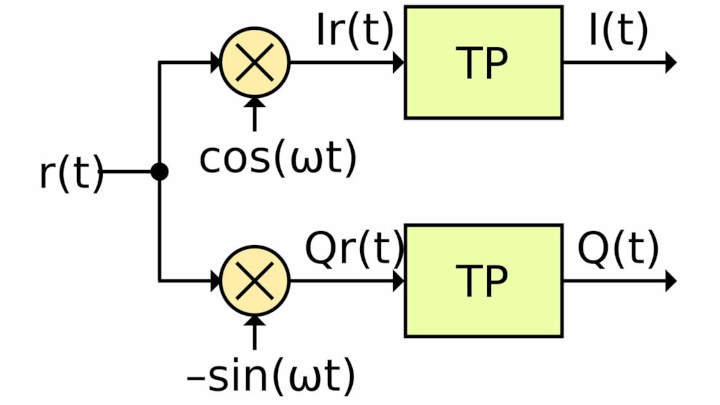
The topics studied in the DIGCOM research group are: Modulation/Demodulation, Coding/Decoding, Carrier and Clock Synchronisation, and Equalization.
GAIM Group for Artificial Intelligence and Sparse Modelling
GAIM’s research is at the intersection of machine learning, signal processing and information theory. We are developing algorithms for representation learning, deep learning and sparse coding for pattern recognition and classification, analysis of high-dimensional signals and information recovery from partial and corrupted data. We are also studying inference in generic probabilistic graphical models and reasoning under uncertainty. The application areas of our research include machine vision, biomedical processing, remote sensing and art investigation.
IPI Image Processing and Interpretation
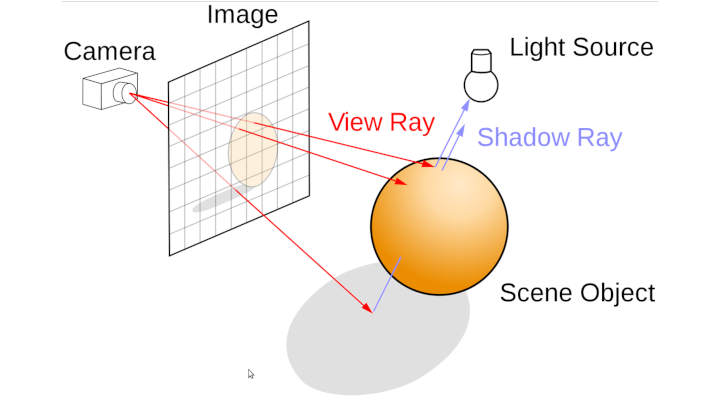
Within the IPI research group the following topics are being studied: Watershed Based Segmentation, Content Based Image Retrieval, Edges and Line Detection, Model-Based Image Interpretation, Motion Estimation and Motion-Based Segmentation, Scale Space, Stereo Vision, Texture segmentation, Image processing techniques for the detection of buried landmines, Techniques for restoration and quantitative image analysis of medical ultrasound images, Compression of medical images and video.
SMACS Stochastic Modeling and Analysis of Communication Systems
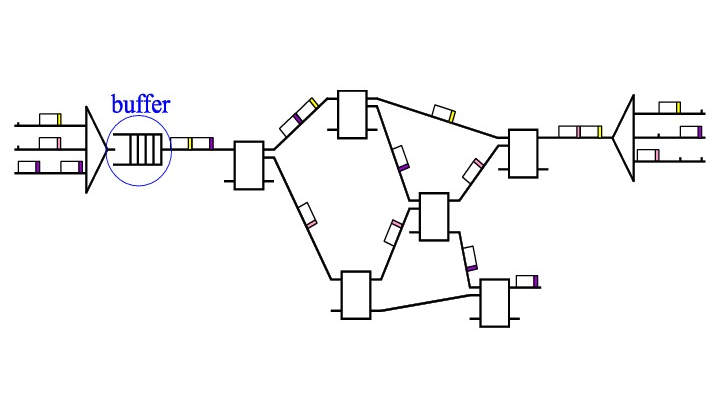
The main applications of the work done by this group are situated in the performance assessment of digital communication systems and networks. The research activities of the SMACS Research Group can be more or less divided in two parts. The major topic is the statistical analysis of buffers for the storage of digital information, by means of discrete-time queueing models. The second (minor) topic is the design, analysis and optimization of ARQ retransmission protocols.